
Deepfake Attacks Are Evolving Faster Than Businesses Can Keep If your business still thinks deepfakes are something that only happens in movies… It’s already behind.
Deepfake attacks have become one of the fastest-growing AI cyber threats in 2025–2026, and cybercriminals are now using AI to create incredibly convincing impersonations of CEOs, vendors, partners, and employees.
These aren’t just email scams anymore. We’re seeing real-world attacks involving:
- AI-cloned executive voices
- Fake video calls through Zoom or Teams
- Deepfake CEO fraud
- Synthetic identity attacks
- Deepfake social engineering
- Real-time impersonation using AI tools accessible to anyone
For small and mid-sized businesses, the risk is even higher. Outdated cybersecurity training can’t detect realistic AI voices. Traditional MFA can be bypassed through manipulated conversations. And employees aren’t trained to question a video call that looks real.
This article will show you what deepfake attacks look like, how they work, how to detect them, and, most importantly, how to protect your business before it’s too late.
What Are Deepfake Attacks And Why Are They Exploding?
A deepfake attack uses artificial intelligence to create highly realistic fake audio, video, or images to impersonate real people. Today’s tools make it shockingly easy for cybercriminals to create a convincing clone of a voice, face, or entire video call, and in many cases, the victim never realizes they’re talking to AI.
Why Deepfake Attacks Are Growing So Fast
- AI tools now require just 3–5 seconds of audio to clone a voice
- Attackers can generate real-time AI responses
- Deepfake software has become free or extremely cheap
- Businesses rely heavily on remote communication, making video calls easy to exploit
This makes deepfake attacks one of the most dangerous AI cyber threats in the modern business world.
How AI Makes Impersonation Easier Than Ever
AI voice cloning tools can mimic anyone with frightening accuracy. Attackers scrape public videos, podcasts, interviews, or even voicemail greetings to create an AI voice scam that sounds identical to you, your CFO, or your CEO. And it doesn’t stop at voice.
Cybercriminals now use:
- Lip-synced AI video
- Real-time deepfake face mapping
- Synthetic identity attacks for interviews and vendor calls
- AI-generated employee “videos” requesting urgent approvals
This level of impersonation makes deepfake attacks nearly indistinguishable from real communication.
Real Examples of Deepfake Fraud Targeting Businesses
Deepfake fraud is no longer hypothetical. Businesses around the world have reported:
- A finance employee wired $35 million after receiving a fake deepfake CEO video call
- HR teams interviewed deepfake “candidates” attempting to steal sensitive data
- IT teams received fake “executive” calls demanding password resets
- Accounting departments processed fake vendor invoices based on AI-generated calls
This is why deepfake risks for businesses are growing exponentially, and why protection requires a new cybersecurity approach.
Why Your Business Is Now at Risk (More Than Ever)
Most small and mid-sized businesses (SMBs) are completely unprepared for deepfake threats because:
- Employees aren’t trained to detect AI impersonation
- IT teams are overstretched
- Security policies were created before deepfakes existed
- Attackers target SMBs because verification steps are weak
- Executives frequently share video content publicly, making cloning easy
If you haven’t updated your cybersecurity training or identity verification procedures in the last 12 months, your business is vulnerable.
Voice Cloning & CEO Impersonation: The Silent Killer
This is the most dangerous form of AI impersonation because it bypasses trust barriers instantly.
Imagine your finance manager receiving a call that sounds exactly like you:
same tone, same accent, same cadence, “I need a wire transfer sent right away.”
Most employees will comply.
This is how modern CEO fraud works.
Video Deepfakes in Zoom & Teams Meetings
Attackers can join video calls as:
- A “vendor”
- A “CEO traveling abroad.”
- A “lawyer”
- A fake job candidate
These are sophisticated synthetic identity attacks, often used to steal data or trick employees into dangerous actions.
Deepfake-Driven Financial Fraud (BEC 3.0)
Business Email Compromise (BEC) has evolved. It’s no longer just email.
BEC 3.0 uses:
- Deepfake voices
- AI-generated videos
- Fake executive instructions
- Synthetic identities
This makes deepfake fraud significantly harder to detect, and far more financially destructive.
How Deepfake Attacks Work Step by Step
Understanding how deepfake attacks unfold is the first step to preventing them. These threats aren’t random, they follow a predictable pattern that cybercriminals refine with every new AI tool. Once you understand the lifecycle, the red flags become much easier to spot.
1. Recon: Attackers Gather Your Voice or Image
Every deepfake attack begins with a reconnaissance phase. Cybercriminals quietly collect your publicly available audio or video, often without you ever noticing.
They commonly pull clips from social media, recorded Zoom sessions, webinars, YouTube interviews, voicemail greetings, or any content where your executives speak on camera. With just a few seconds of audio, attackers can build a convincing AI-generated voice model.
This is why limiting your executives’ public audio and video exposure is no longer optional; it’s a fundamental part of modern business deepfake protection.
2. AI Generation: Building the Fake Voice or Video
Once attackers have enough samples, they use deepfake generation software to create a synthetic version of your voice or face. AI analyzes tone, pitch, rhythm, facial structure, and even micro-expressions.
The result? A disturbingly accurate clone.
Today’s tools can generate a “CEO video” asking for a financial transfer or an “IT director voice call” demanding a password reset. This is the rising threat at the core of modern deepfake cybersecurity.
3. Social Engineering: Where the Real Attack Happens
After creating the fake voice or video, attackers move into the social engineering phase. This is where the deception becomes dangerous.
They may call an employee pretending to be an executive, join a meeting as a fake vendor, or send a deepfake video message requesting a wire transfer. And because the impersonation looks and sounds real, urgency and authority become powerful manipulation tools.
Attackers often mimic classic phishing techniques, pressure, urgency, confusion, but supercharged with AI. This is where businesses lose money, data, and trust.
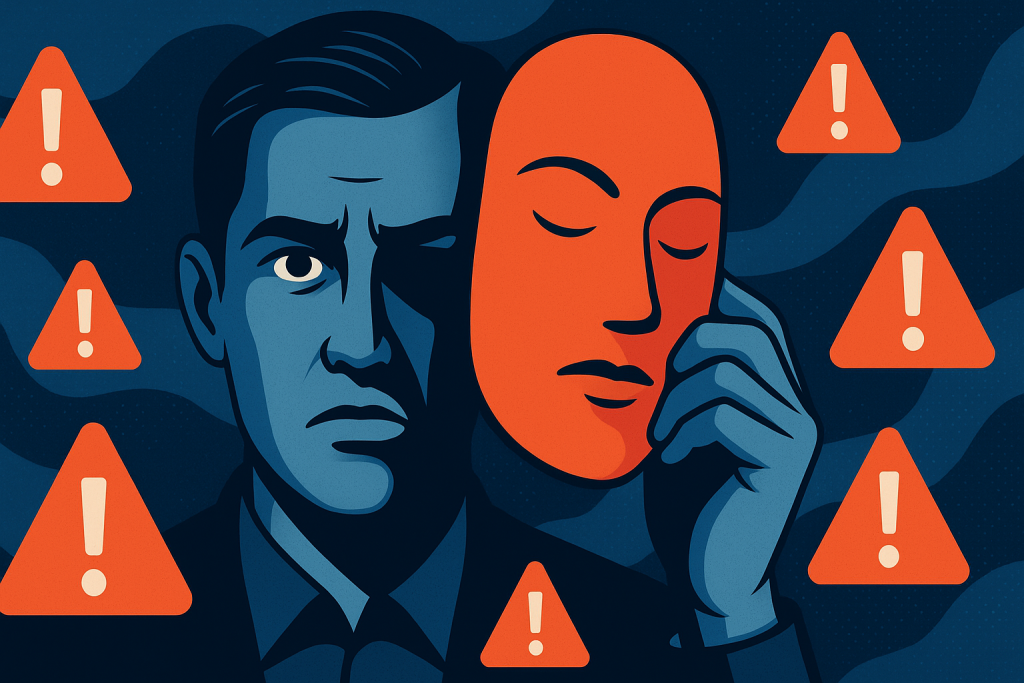
7 Warning Signs You’re Facing a Deepfake Attack
Businesses must teach employees how to spot suspicious patterns.
Watch for:
- Slight robotic tone or unnatural speed
- Voice that sounds “almost” right but slightly off
- Asynchronous video lip movements
- Unexpected video/voice calls from executives
- Urgent financial requests
- Requests to bypass normal procedures
- Caller refuses alternative verification
These are critical signs of deepfake prevention awareness.
How to Protect Your Business From Deepfake Attacks
Deepfake attacks are advancing faster than most businesses can keep up, but with the right mix of identity controls, cybersecurity tools, and modern awareness training, you can dramatically reduce your exposure. Below are the most effective, business-critical steps every organization should implement now.
1. Implement Strong Identity Verification Procedures
Relying on voice or video recognition alone is no longer safe. Deepfakes can convincingly mimic executives and vendors, making traditional validation methods obsolete.
Your business should adopt Zero Trust Security, enforce multi-factor authentication, require internal callback verification, and establish strict financial approval workflows.
These identity controls are a core component of Systech MSP’s managed cybersecurity framework and remain one of the strongest defenses against AI-powered impersonation attacks.
2. Train Employees to Detect AI-Powered Threats
Most employees have never encountered a deepfake and cannot confidently identify manipulated audio or video. That gap is exactly what attackers exploit.
Modern cybersecurity awareness training must include:
- Deepfake detection techniques
- AI-driven social engineering scenarios
- Realistic threat simulations
- Behavioral red-flag identification
Systech MSP’s training programs help teams quickly recognize AI impersonation attempts, making your people a central pillar of business deepfake protection.
3. Use MDR (Managed Detection & Response) for Real-Time Attack Detection
Deepfake attacks often trigger secondary intrusions such as suspicious logins, credential theft, and unauthorized access attempts.
This is why MDR (Managed Detection & Response) is essential.
Systech MSP’s MDR solution combines:
- 24/7 monitoring
- Behavioral analytics
- Endpoint security
- Real-time threat isolation
This allows us to detect deepfake-related anomalies immediately, stopping a potential breach before it escalates.
4. Reduce Public Exposure of Executive Audio/Video
Attackers only need a few seconds of audio or basic video clips to build a convincing deepfake. Businesses should minimize the amount of publicly available executive footage, especially unedited recordings, internal meetings, or raw audio samples.
This isn’t about secrecy; it’s a practical component of deepfake prevention and modern cybersecurity hygiene.
5. Strengthen Financial Verification Procedures
Many deepfake attacks result in fraudulent wire transfers. To prevent this, businesses must enforce financial verification policies that cannot be overridden by “urgent” voice or video requests.
This includes:
- Multi-person approval
- Out-of-band verification steps
- Confirmation through secure internal channels
- A strict “no voice-only approval” policy
These processes close the loopholes exploited in deepfake fraud, ensuring your financial controls remain secure even against highly sophisticated AI manipulation.
How Systech MSP Prevents Deepfake Attacks with Managed Cybersecurity
Deepfake attacks require a modern security approach, and that’s exactly what Systech MSP delivers through our advanced managed cybersecurity and MDR services.
24/7 Monitoring & Anomaly Detection
Deepfake attempts often create unusual digital footprints: abnormal login attempts, suspicious communication patterns, unauthorized account activity, or unexpected meeting requests.
Our SOC team monitors your environment around the clock, ensuring that these anomalies are detected and responded to immediately before attackers gain traction.
AI-Powered Threat Detection Systems
Systech MSP uses AI threat detection and advanced analytics to identify signals that humans miss, such as linguistic inconsistencies, behavior anomalies, forged caller metadata, and device irregularities.
When dealing with AI cyber threats, only AI-assisted security provides the speed and precision necessary for protection.
Employee Cybersecurity Awareness Training
Deepfake protection isn’t just technology, it’s people. Your employees must be prepared to challenge suspicious communications, verify identity requests, and understand how deepfakes work.
Systech MSP’s cybersecurity awareness training gives teams the knowledge and confidence to resist AI-driven impersonation attempts. With the right guidance, your people become your strongest defense.
Real-World Scenario: How a Deepfake Could Hit a Small Business
Imagine this: Your accounting manager receives a video call from your CEO. The voice is perfect. The face looks real. The message is urgent, a vendor needs a $48,000 payment processed immediately to avoid a contract issue. Trusting the request, the accountant wires the money.
Only later does the real CEO discover the transfer and deny ever making the call. By that point, the funds are gone. The attacker used a deepfake video generated from the CEO’s public seminar recordings.
What Should Have Happened Instead
A simple identity verification callback could have stopped the attack instantly. Updated financial approval workflows would have required multi-person sign-off. MDR monitoring would have flagged the unauthorized meeting request. Restricting executive video exposure could have prevented the attack altogether.
Most importantly, trained employees would have recognized the subtle warning signs of a deepfake attack.
With Systech MSP, these protections are built into your strategy from day one.
Conclusion: Don’t Wait for a Deepfake Attack to Hit Your Business
Deepfake attacks are happening right now, targeting businesses of all sizes. Cybercriminals no longer need to hack your network, they can simply impersonate you.
The best defense is proactive protection, not hope. With Systech MSP’s Managed Cybersecurity, MDR, and advanced cyber awareness training, your business gets:
- AI-powered threat detection
- 24/7 monitoring
- Deepfake attack prevention
- Employee training
- Zero Trust security implementation
- Enterprise-grade protection
Protect your business today – before an attacker uses your identity against you.
Get a deepfake readiness assessment from Systech MSP now.
FAQs: Deepfake Attack Essentials
1. How do deepfake attacks trick employees?
By replicating real voices and faces with AI, making impersonation extremely convincing.
2. What’s the difference between an AI voice scam and a deepfake?
Voice scams use audio clones; deepfakes use full video impersonation.
3. Can deepfake fraud bypass MFA?
Not directly, but attackers trick employees into giving them what they need.
4. How can small businesses detect AI-generated voices?
Look for unusual tone, robotic speed, and unexpected requests.
5. Are deepfakes used in business email compromise (BEC)?
Yes, this is BEC 3.0 with AI impersonation.
6. What cybersecurity tools stop deepfakes?
MDR, identity verification, Zero Trust, and security awareness training.